Turn your Lovable web app into Android and iPhone apps

You built a web app in Lovable and now want it on phones, in Google Play and the App Store. Lovable publishes web apps; packaging an app for the stores happens outside it, and that is the part we take on. Our in-house mobile team in Rajkot, India reviews your app first, recommends how much of it to reuse, then adapts, tests and helps you release it.

Starts from
Your existing Lovable app
Platforms
Android · iPhone · both
First step
A review of the app and its back end
Company team
70+ in-house

Who this suits

  • Owners of a Lovable app that already works on the web and now need Android and iPhone versions in the stores.
  • Apps that are nearly ready: most flows work, but sign-in, payments or a few screens break on phones.
  • Projects with unfinished or unreliable features, where fixing them comes first and is scoped as its own step.
  • Teams not yet sure a store app is worth it. Sometimes a phone-friendly web app is the better first step, and we will say so.

What we take on

From your Lovable link to a store release.

  • 1. Share the app

    Send the link and tell us what the app does and which phones you need. Code, project and back-end access come later, by invitation, after the first conversation. Please do not send passwords or keys.

  • 2. Review

    We agree how deep the review goes and what access it needs before it starts. Then we check how the app is built and where it runs, the back end and sign-in, payments, the features that matter most, and which store rules apply. You get written findings and a recommended approach, with the reasons.

  • 3. Agree the approach and scope

    A written scope: which approach, which flows change, which native features are included, what is fixed first, who tests and what release help you need, with the price for that scope.

  • 4. Adapt or build

    The agreed changes: layout and navigation for phones, sign-in and payment adjustments, native features, and the Android and iPhone builds. You see progress in short cycles.

  • 5. Test on real phones

    Our QA team tests the important flows on Android phones and iPhones, including sign-in, the keyboard, poor connections and permissions, then fixes what it finds.

  • 6. Store submission and handover

    We prepare the store listings, privacy answers and notes for reviewers in your own developer accounts, submit, and help with review questions. You keep the code, accounts and signing setup.

  • 7. Maintenance if you want it

    Store rules, OS versions and libraries keep changing. Ongoing support is optional and agreed separately.

Technologies: React · TypeScript · Capacitor · Supabase · Flutter · React Native · Kotlin · Swift · Android Studio · Xcode

What stays, what changes

What can stay as it is, and what usually changes.

Every Lovable app is a little different, so this is checked in the review, not assumed.

  • Screens and layout

    In a hybrid app, your existing web interface is reused inside a native app shell, then adjusted for phones: space around the notch and home bar, the on-screen keyboard, touch targets, back navigation and loading states. In a rebuild, the screens are recreated in Flutter, React Native or native code, with the web app as the specification.

  • How the app is built

    Older Lovable apps use React and Vite and run in the browser, so their built files can usually be packaged in a native shell. Apps created from 13 May 2026 (later for Enterprise workspaces), and older apps that were upgraded, use TanStack Start, which renders pages on a server. Those need an adjusted build or a hosted part, not a straight copy. We check which you have first.

  • Data and back end

    Your database and back end, for example Lovable Cloud or your own Supabase project, can usually stay where they are if the mobile app can reach them safely. Downloading the code does not move the database. Moving the back end is a separate, manual job, and we only suggest it when there is a reason.

  • Sign-in and accounts

    Existing accounts can often keep working, but email links, social sign-in and password reset may need changes inside an app. Apple and Google both require a way to start account deletion from inside the app when users can create an account, and Google Play also needs a web page for deletion requests. If you offer social sign-in for the main account, Apple usually also asks for an equivalent privacy-friendly sign-in option.

  • Payments

    Physical goods and services can usually keep their current payment provider. Digital content and subscriptions sold in the app generally have to use Apple's and Google's in-app billing, with some regional exceptions. We check what you sell before planning this.

  • Phone features

    Push notifications, camera, location, file uploads, deep links or offline use, added only where agreed. Each one adds testing and changes the permission and privacy answers in the stores.

  • Updates after launch

    Content and data from your server can change without a store release. Changes to the app's own code or native features go through store review each time. If you keep editing in Lovable, we agree how those changes reach the mobile apps.

  • Ownership

    The code stays in your GitHub repository and the store listings in your own Apple and Google developer accounts. We work through invited access, not shared passwords.

What you get

What is delivered, and what is scoped separately.

  • A readiness review

    Written findings on how the app is built, its back end, sign-in, payments and store risks, with the approach we recommend and why.

  • Phone-ready screens and flows

    The agreed layout, navigation, keyboard and safe-area changes, and fixes to the flows that matter most on a phone.

  • Agreed native features

    The phone features in the scope, such as push notifications or camera access, with the permissions they need.

  • Android and iPhone builds, tested

    Release builds prepared in your accounts, tested on real Android phones and iPhones by our QA team.

  • Store release help

    Listing text and screenshots, privacy and data-safety answers, notes for reviewers, submission and replies to review questions. New personal Google Play developer accounts must first run a closed test with at least 12 testers for 14 days.

  • Scoped separately

    Repairing features that do not work yet, a security review, a full rebuild and ongoing maintenance are each estimated on their own, so the conversion itself stays clear.

  • What sets the price

    The approach, the number of screens and user roles, how much needs fixing first, sign-in and payment changes, native features, one platform or both, and how much store help you need. We quote after the review and do not publish fixed packages for this work.

Apple and Google decide whether an app is approved. We prepare the app and the submission to meet their published rules and help with any review questions, but we cannot guarantee approval.

Choose the approach

Three ways to put a Lovable app on phones

We recommend one after the review. The biggest option is not the default.

A phone-friendly web app
When people mostly use it in a phone browser, or you want to test demand first. It can be installed to the home screen as a progressive web app (PWA). No store accounts are needed, but there is no store listing, and installed web apps on iPhone have limits.
A hybrid app (your web app inside a native shell)
When the web app already works well and you need a store presence and some phone features. Most of the interface is reused, packaged with a tool such as Capacitor. It still has to feel like an app: stores can reject apps that only show a website.
A cross-platform or native rebuild
When the app needs heavy native features, solid offline use or a phone interface the web layout cannot give. Built in Flutter, React Native or native code, reusing your back end and logic where possible.
Mobile app development

Proof

Mobile apps our team has shipped

Related mobile experience, not Lovable projects: apps released on both stores, push messages, payment providers, and third-party web pages shown inside an app.

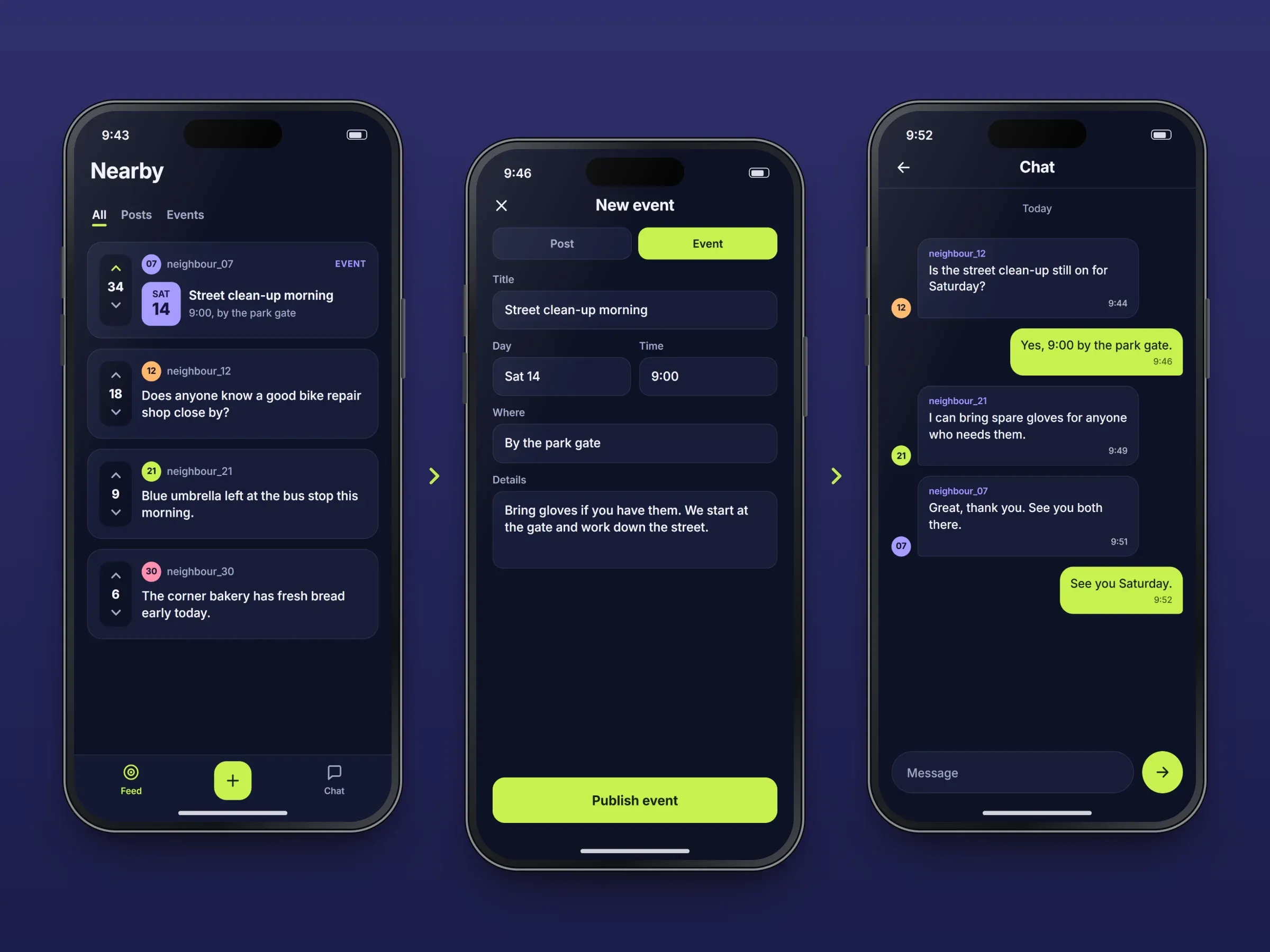
Recreated screens of a local community app with example data: enlarged posts from the Nearby feed beside a phone showing the whole feed with an event and three posts

Screens recreated with neutral naming and example data.

Mobile app · iOS, Android

Local Community App

Flutter app for iOS and Android with our Node.js back end: a neighbourhood feed with posts, events and chat. Published on both stores in 2025.

Period
Published 2025
Platforms
iOS, Android
Our scope
Flutter app for iOS and Android, Node.js back end, Push messages
Read the case study
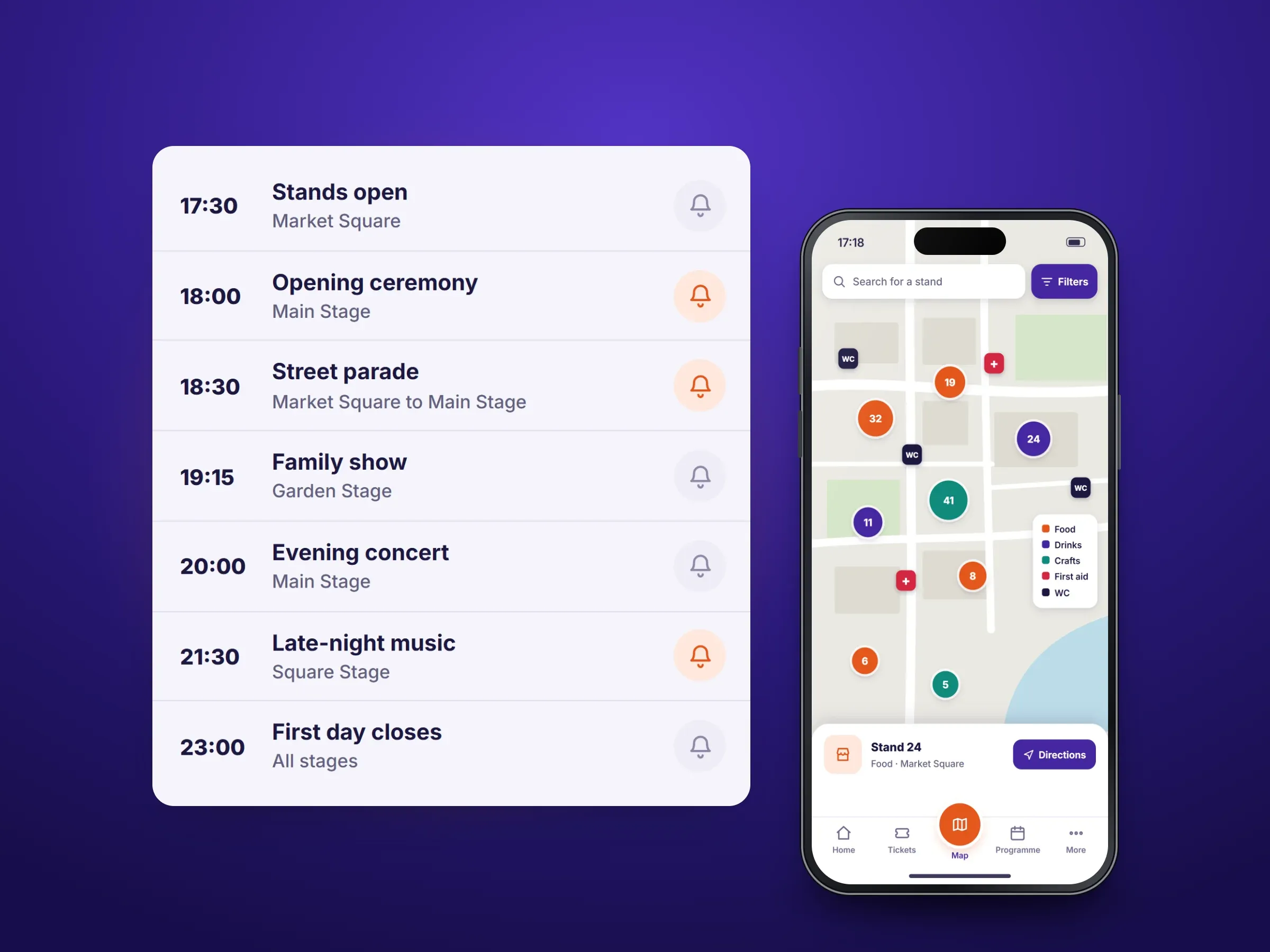
Recreated stand map, enlarged, with numbered groups of stands, first aid and WC markers and a legend for food, drinks, crafts, first aid and WC on a drawn map, beside a phone showing the day's programme

Screens recreated with neutral naming and example data.

Mobile app · Android, iOS

Festival Companion App

A Flutter app for Android and iOS that puts a multi-day festival's programme, reminders, stand map and push alerts in one place, with tools for vendors.

Period
2024 to 2025
Platforms
Android, iOS
Our scope
Flutter app, Programme and map, Alerts and vendor tools, Third-party web pages
Read the case study
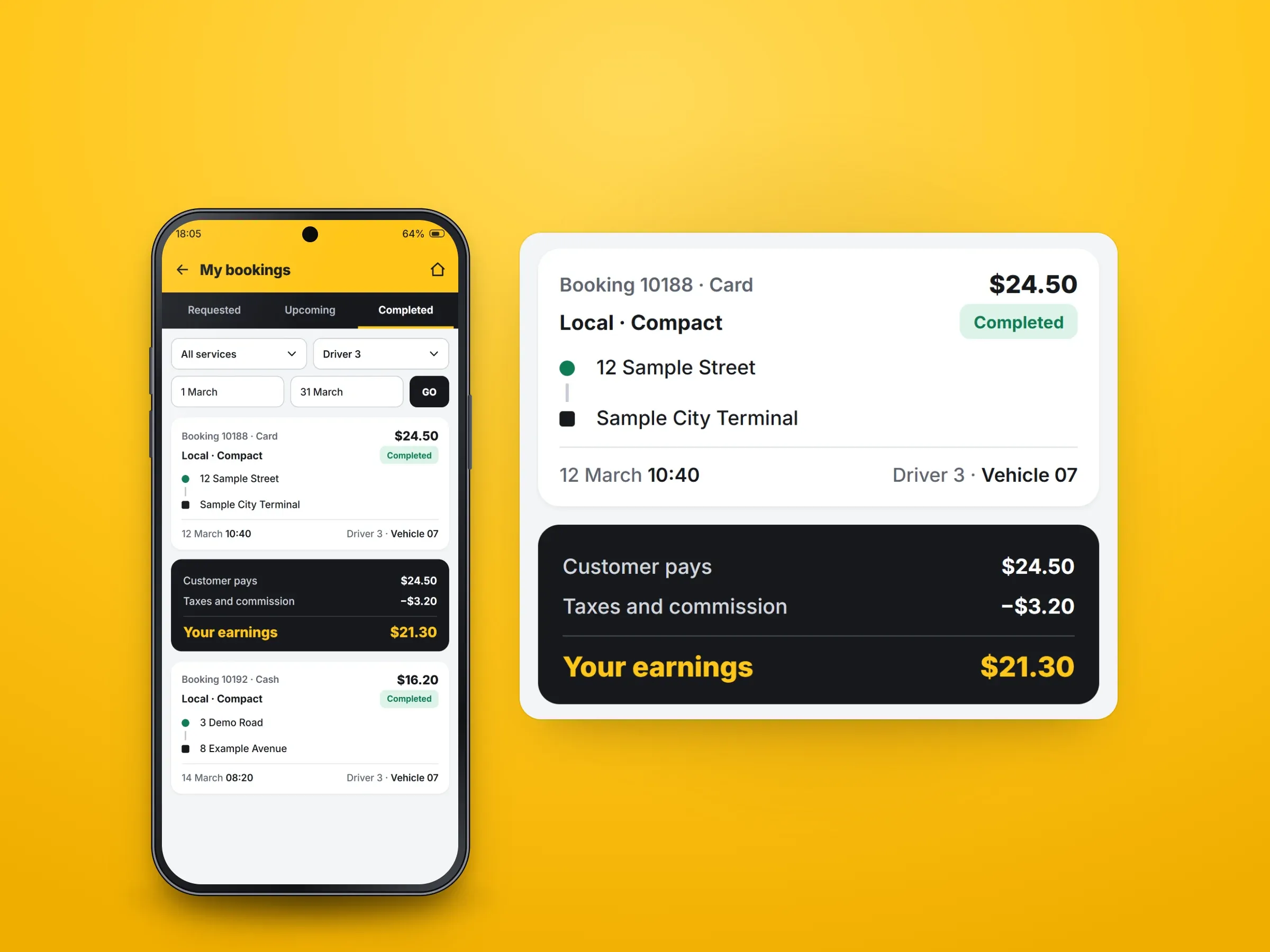
Recreated customer booking screen with a route on a drawn map and an estimated fare of $12.90, beside panels from other roles: a dispatcher's upcoming bookings, an operator's earnings of $21.30 for one ride, and an operator's list of drivers

Screens recreated with neutral naming and example data.

Mobile app · Android, iOS

Multi-Role Taxi Platform Apps

Native Android and iOS apps for a taxi platform: customers book rides, dispatchers manage bookings, and operators look after drivers, vehicles and earnings, all on the client's own back end.

Period
Development started around 2018
Platforms
Android, iOS
Our scope
Android apps, iOS apps, Driver and partner workflows, Maps and payments
Read the case study

Who you work with

The developers who lead this work

  • Kinnari

    Kinnari

    Android Development Lead

    Kinnari leads native Android development: the Android side of the apps the mobile team builds and maintains.

  • Dharmesh

    Dharmesh

    iOS Development Lead

    Dharmesh leads native iOS development: iPhone and Apple Watch apps.

  • Vivek

    Vivek

    Flutter Development Lead

    Vivek leads Flutter development, where one Dart codebase serves both iOS and Android.

  • Nur

    Nur

    React Native Development Lead

    Nur leads React Native development: cross-platform iOS and Android apps from one codebase.

How an engagement runs

  1. You tell us what you need and what exists today.
  2. We agree a written scope, or a dedicated team, with you.
  3. We build in short cycles you review, then release and support.
How we work, in detail

Questions

Before you get in touch

Can you turn my Lovable app into Android and iPhone apps?

Usually, yes. We review the app first, then recommend an approach: most often a hybrid app that reuses your web interface, sometimes a rebuild, and sometimes a phone-friendly web app is enough. You see the reasons before agreeing anything.

Doesn't Lovable publish apps itself?

Lovable publishes your app to a web address, such as a lovable.app address or your own domain. Its documentation says it builds web apps and has no built-in flow to package and submit a project to the App Store or Google Play. That step happens outside Lovable, and it is the part we do.

Do you have to rebuild the whole app?

No. If the web app works well, much of it can be reused. A rebuild makes sense when the app needs heavy native features or the web layout does not work on a phone. We decide part by part and explain why.

Will my existing users and data still work?

Often, yes. The mobile apps can usually use the same database, sign-in and back end. Some sign-in methods, email links and payments need changes inside an app, and we check these in the review.

Can I keep editing the app in Lovable afterwards?

Often, yes. Lovable can sync with a GitHub repository in both directions, so the same code can feed the web app and the mobile builds. We agree a workflow, because changes to the mobile apps' own code still need a new store release. Back-end changes, such as database updates or server functions, are still applied in Lovable separately.

Will Apple and Google accept an app built from a web app?

They can. Neither store bans apps built with web technology, but Apple expects more than a repackaged website, and Google Play rejects apps with limited or broken functionality. The app has to be useful as an app, with working phone-friendly flows. No one can guarantee approval; we prepare the app and submission to meet the published rules.

What if my app sells subscriptions or digital content?

Inside a store app, digital content and subscriptions generally have to use Apple's and Google's in-app billing, with some regional exceptions. Physical goods and services can usually keep your current payment provider. We plan this in the review, because it can change the scope.

My app is not finished, or some features do not work. Can you still help?

Yes. Fixing or finishing features is scoped as its own step before or alongside the mobile work, so you can see what each part involves. If the app mainly needs repair, our maintenance and takeover service is the better starting point.

What do you need from me to start?

The app's link and a short description are enough to begin. Later, by invitation: access to the code (for example through GitHub), the Lovable project and the back end, and your own Apple Developer and Google Play developer accounts. The accounts stay in your name, and you pay any Apple or Google fees directly.

How much does it cost, and how long does it take?

It depends on the approach, the number of screens and roles, what needs fixing, sign-in and payment changes, native features and whether you need one platform or both. We quote after the review. Store timing also depends on Apple and Google: account verification, review, and for new personal Google Play accounts a closed test with at least 12 testers for 14 days.

Do you also work with apps built in Bolt, Replit, Base44 or v0?

Yes. The same review applies: how the app is built, where its back end runs, and what it needs on a phone.

Are you part of Lovable?

No. Keshav Infotech is an independent software company in Rajkot, India. We are not affiliated with or endorsed by Lovable; we work with apps people have built in it.
Start a project

Share your Lovable app.

Send the link (a published or demo link is enough; leave it out if the app is private), which phones you need and how far along the app is. We will look at it and explain the next step, including how the review is scoped.

What happens next

Your message goes to Ghanshyam Gadhiya, partner and CEO, who replies by email. If it is easier, you can also reach us on WhatsApp.

About: lovable web app to android and iphone apps

What would you like to do? (optional)

A published or demo link is enough. If the app is private, leave this empty or just add your company name.

Which phones do you need? (optional)
How far along is the app? (optional)

What it does and who uses it, how people sign in and pay (if they do), and any phone features or timing you have in mind. Please do not include passwords, keys or other secrets.

Prefer to message? WhatsApp +91 97235 23243

We use these details only to reply about your project. See our privacy notice.