Case study · Client name withheld
Restaurant Cooking Game
A Unity time-management game for phones, set in Indian and fast-food kitchens
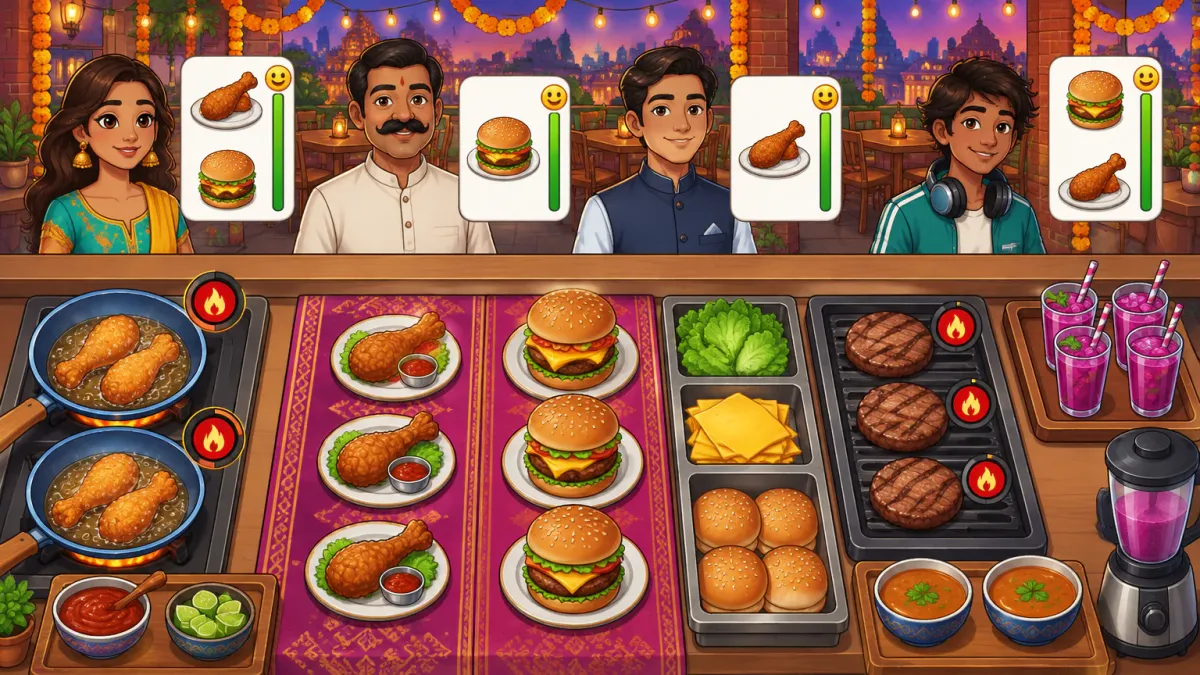
Customers line up at the counter, each with an order and a patience meter. The player cooks, plates and serves before patience runs out, spends the coins on kitchen upgrades and opens new restaurants along a level path. Our team developed the game in Unity.
- Client
- Mobile game publisher
- Platforms
- Android
- Our scope
- Gameplay · Progression · Game interface
The product
What it does, and for whom
A casual restaurant game built around Indian dishes and fast food, played on a phone. Each restaurant brings its own counter, dishes and cooking stations, so the loop stays familiar while the food, timing and layout change from kitchen to kitchen. Everything is played with taps.
Scope The game was fully developed by our team; the publisher runs it and its store presence. To keep the client confidential, the images on this page are new artwork recreated in the game's style for this case study, not screenshots of the delivered game.
Core loop
Inside a level
A street-food kitchen mid-level, recreated as representative art. Every restaurant runs the same loop with its own dishes, stations and pace.
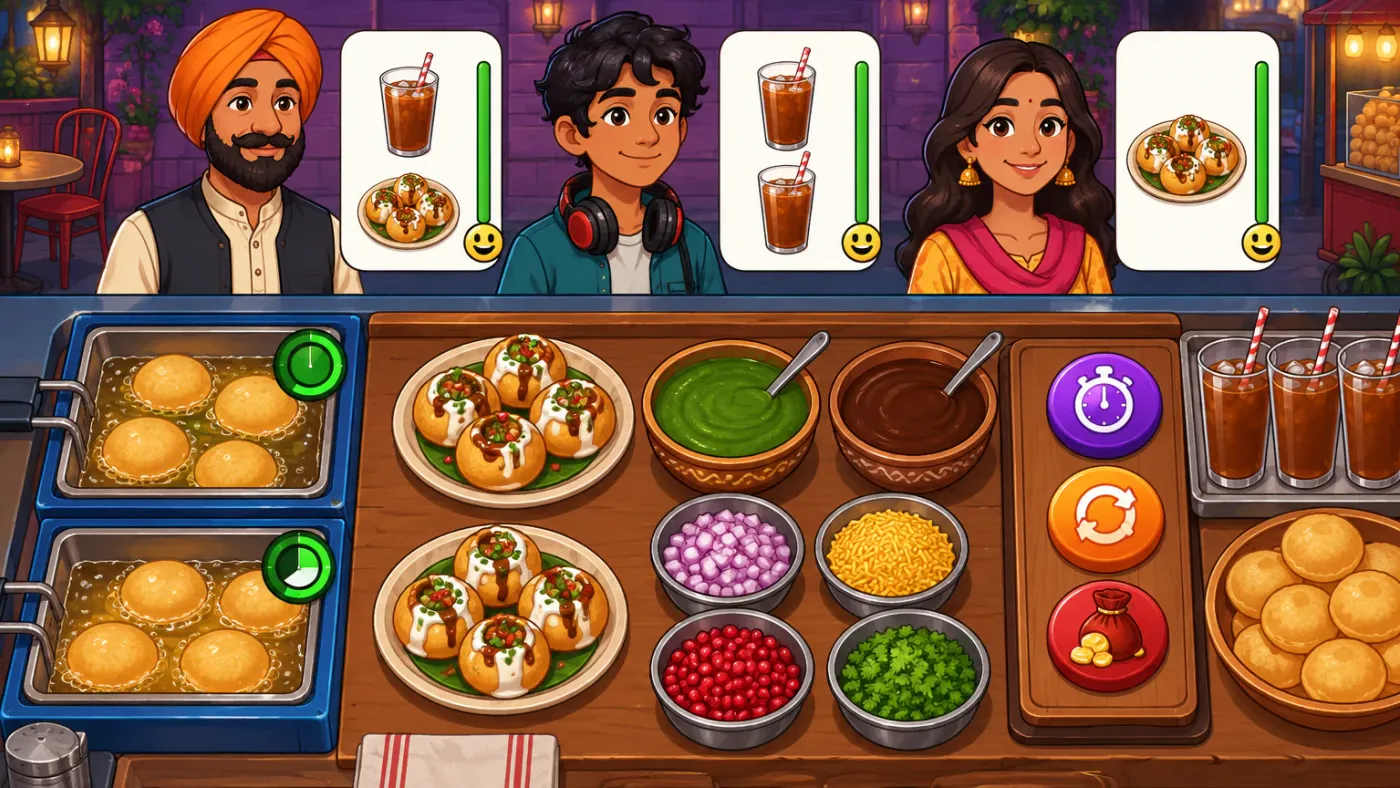
Read the order
Each customer's bubble shows what they want.
Watch their patience
The bar beside each order drains while they wait; the smiley shows their mood.
Cook at the stations
Fryers, grills and pans each take time; a timer shows what is cooking.
Serve the plates
Finished food waits on the counter until it is served to the customer it completes.
Boost when it gets busy
Boosters help when orders pile up faster than the stations can cook.
The product in use
Upgrades and new restaurants
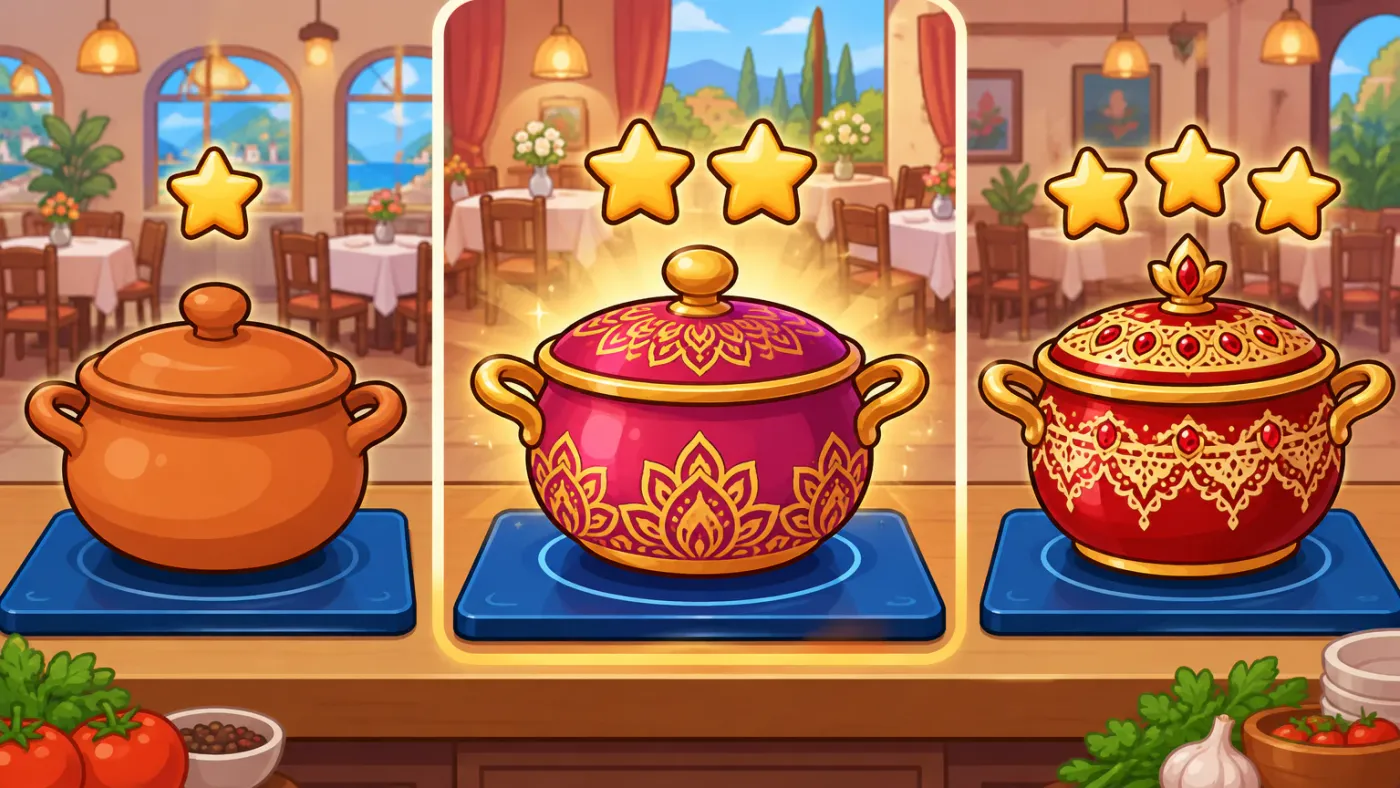
Upgrades between levels
Coins earned in levels buy better kitchen equipment — here one cooking pot at three upgrade levels.
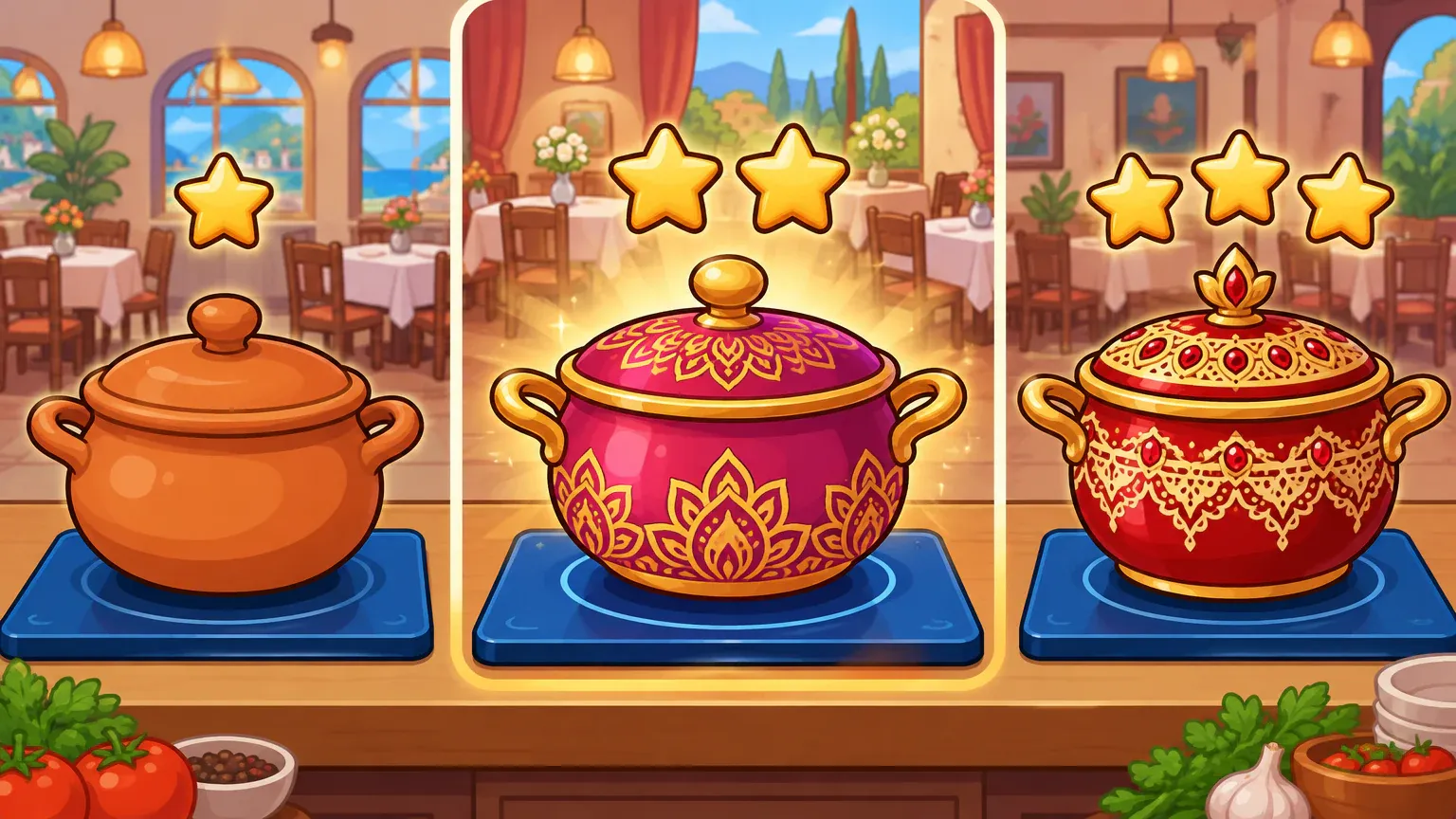
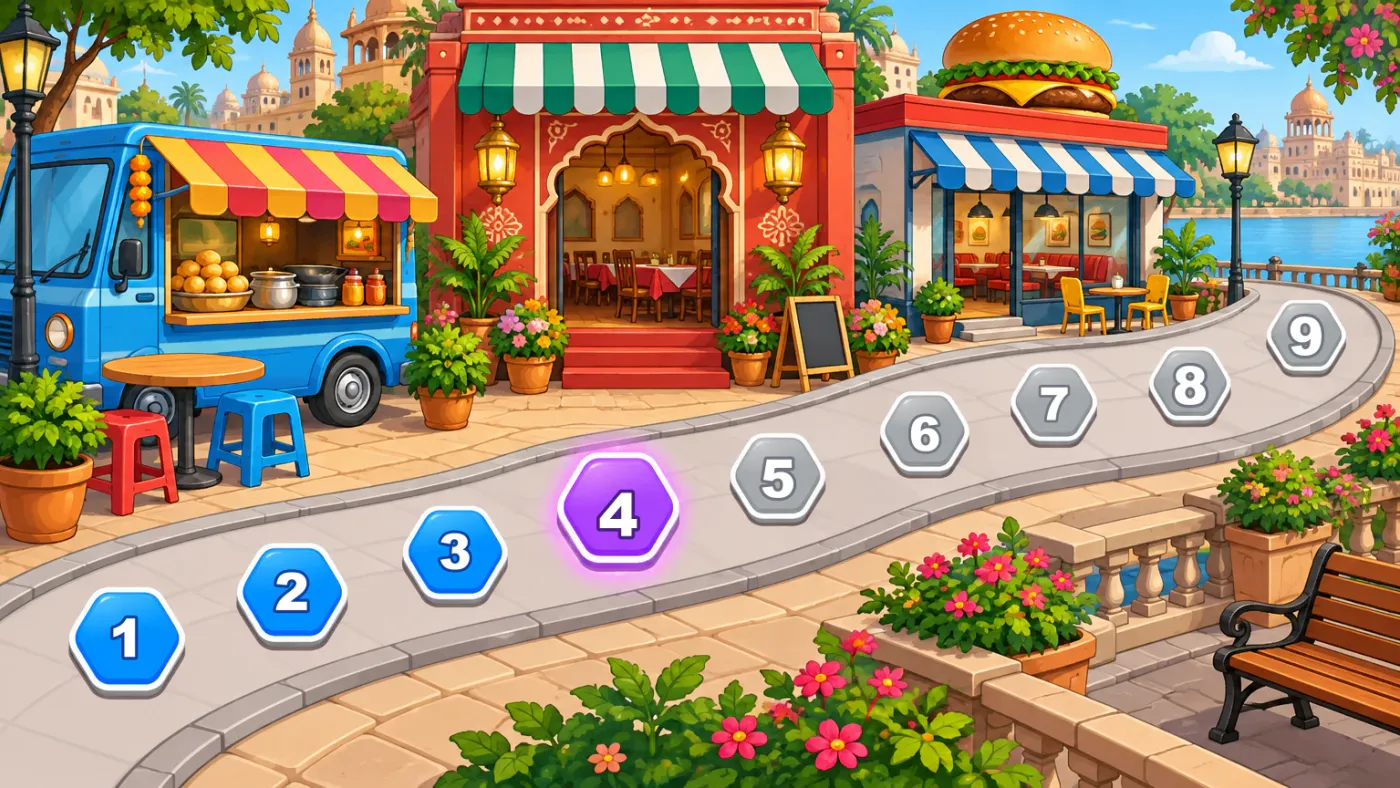
Representative artwork recreated in the game's style: one pot, three upgrade levels. New restaurants along the level path
Levels sit on a path through each restaurant. Finishing them opens the next kitchen — from street food to sit-down restaurants and fast food — each with its own dishes.
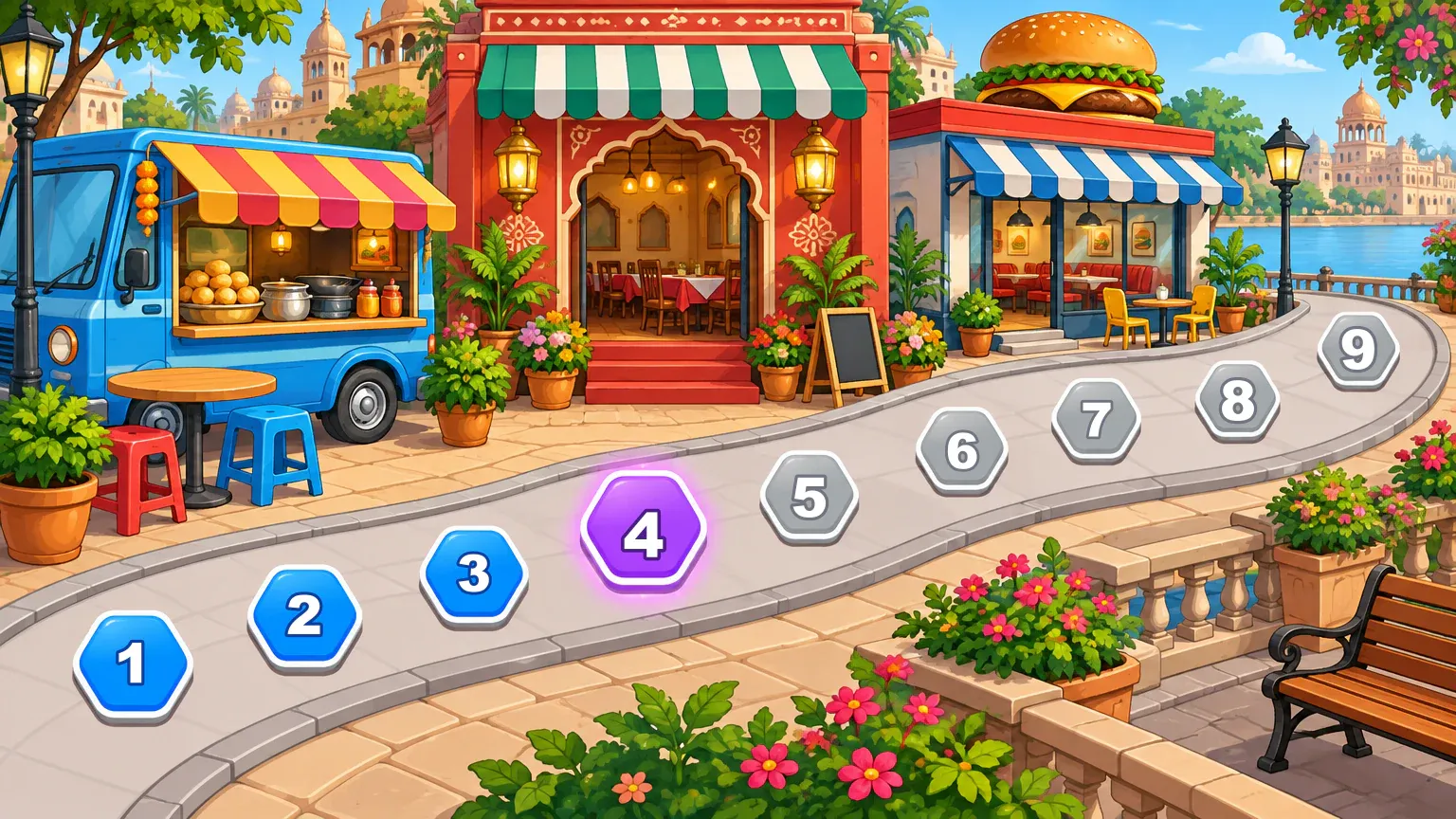
Representative artwork recreated in the game's style: completed, current and locked levels along the path.
About these images: every image on this page is new artwork recreated in the game's style for this case study, to keep the client confidential — it follows the game's screens, mechanics and look (orders, patience, cooking stations, boosters, upgrades, restaurants on a level path) but is not a screenshot of the delivered game.
Our contribution
What our team built
Gameplay
The cooking and serving loop — customer orders with patience meters, cooking stations that take time, plating and serving.
Progression
Levels grouped by restaurant on a level path, coins earned in each level, kitchen upgrades and boosters.
Game interface
Order bubbles and mood at the counter, level maps, and the booster and upgrade interface.
Technologies Unity
Related services