Case study · Client name withheld
Brain-Training Puzzle Games
Five small logic puzzles for phones: hexagons, colours, loops, patterns and paths
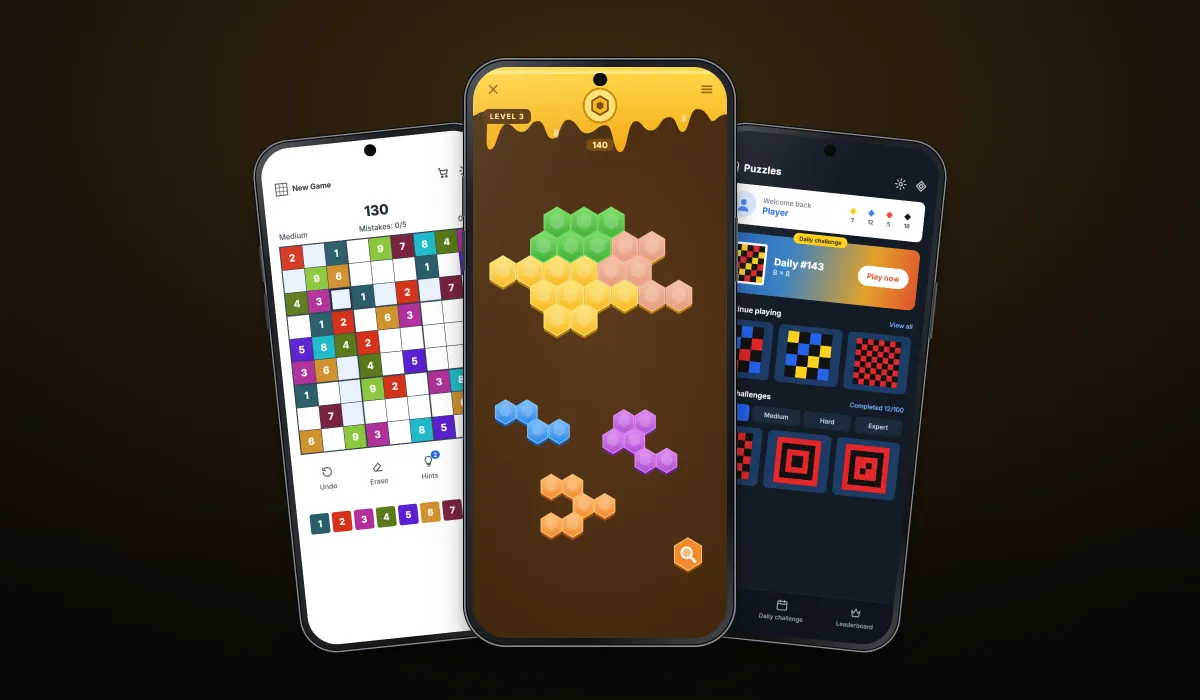
Five small puzzle games developed for clients, each around one clear idea: fit hexagon pieces into a honeycomb, fill a Sudoku with colours instead of numbers, sort coloured balls around two linked loops, rebuild a pattern from red-and-black pieces, and slide tiles until a ball can roll to the goal. Each game has its own levels or difficulty steps, and most add hints for the tricky stages.
- Client
- Game clients
- Platforms
- Mobile
- Our scope
- Game development
The product
What it does, and for whom
Brain-training puzzles live on short sessions: rules a player understands in seconds, levels that get gradually harder, and help — hints, undo or a skip — when a player gets stuck. Each game in this collection keeps its own look and its own puzzle idea.
Scope The clients run the games and their store presence. To keep the clients confidential, the game names are withheld, and every screen on this page is recreated in the game's style for this portfolio with example data — not a screenshot of the delivered game.
The product in use
The games
Hexagon block puzzle
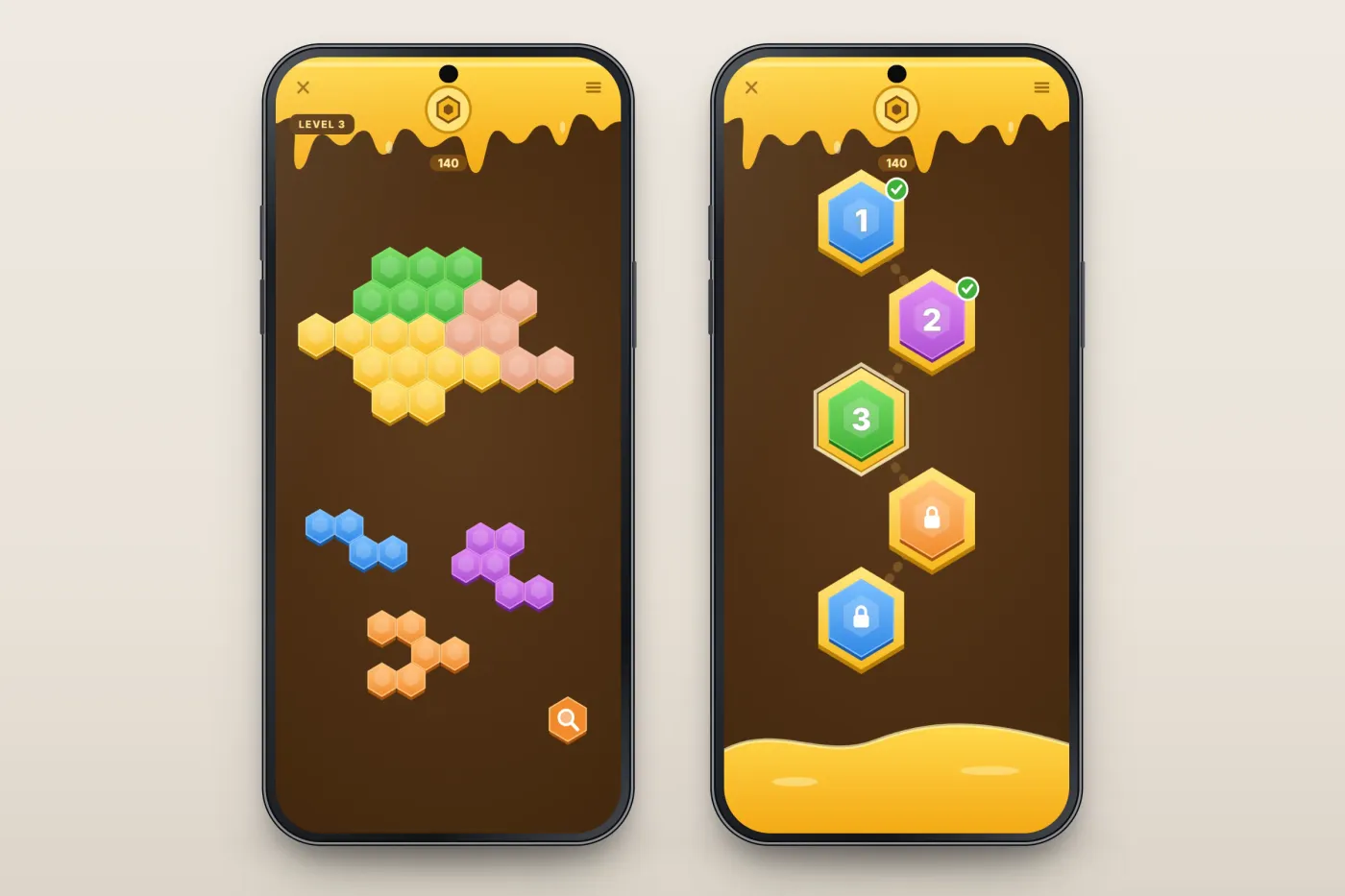
The player drags hexagon pieces onto a honeycomb shape until every cell is filled. Levels unlock one after another, and a hint shows where a piece belongs on tricky stages.
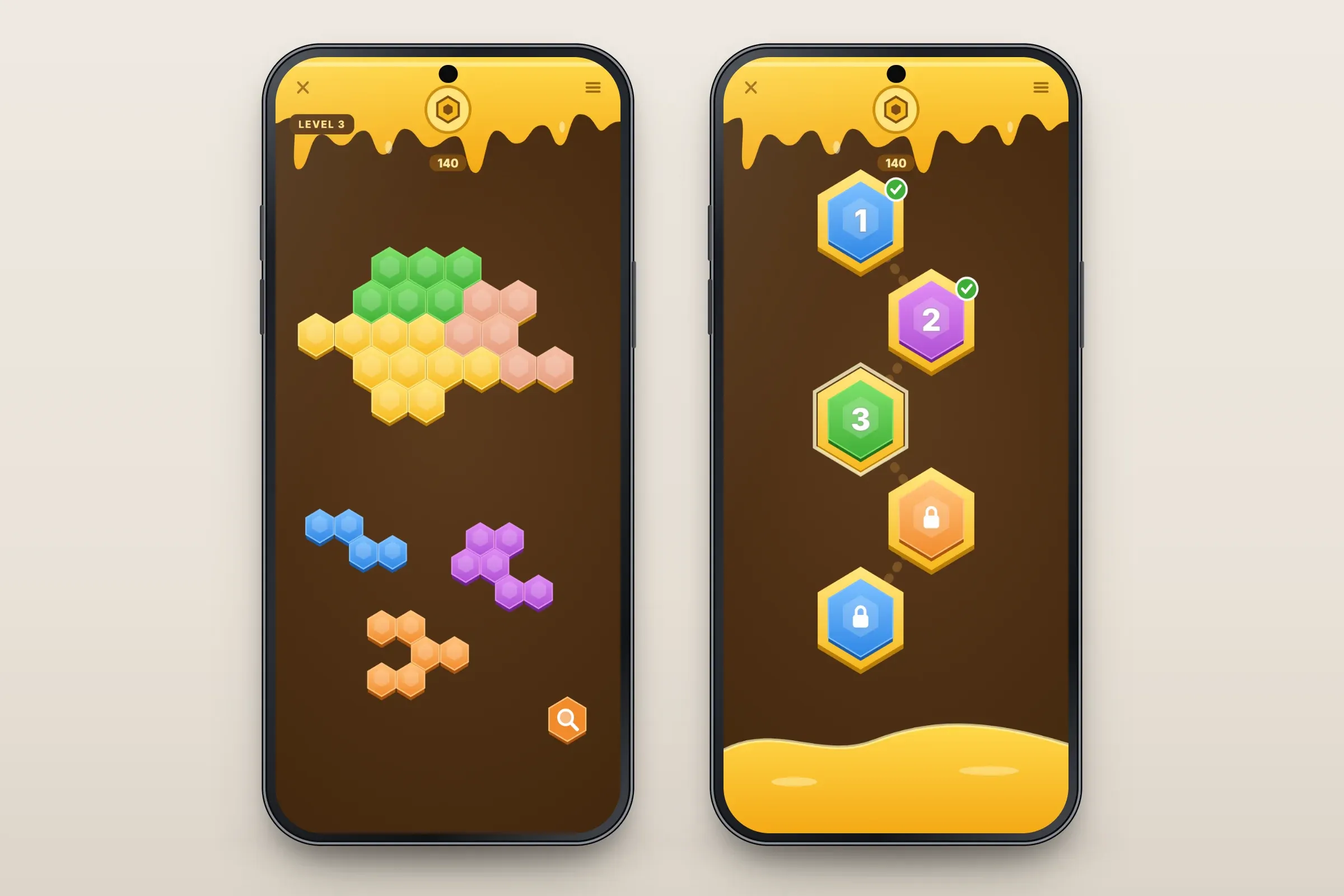
Filling the honeycomb, and the level path. Close-ups on phones: tap any image for the full screen. Colour Sudoku
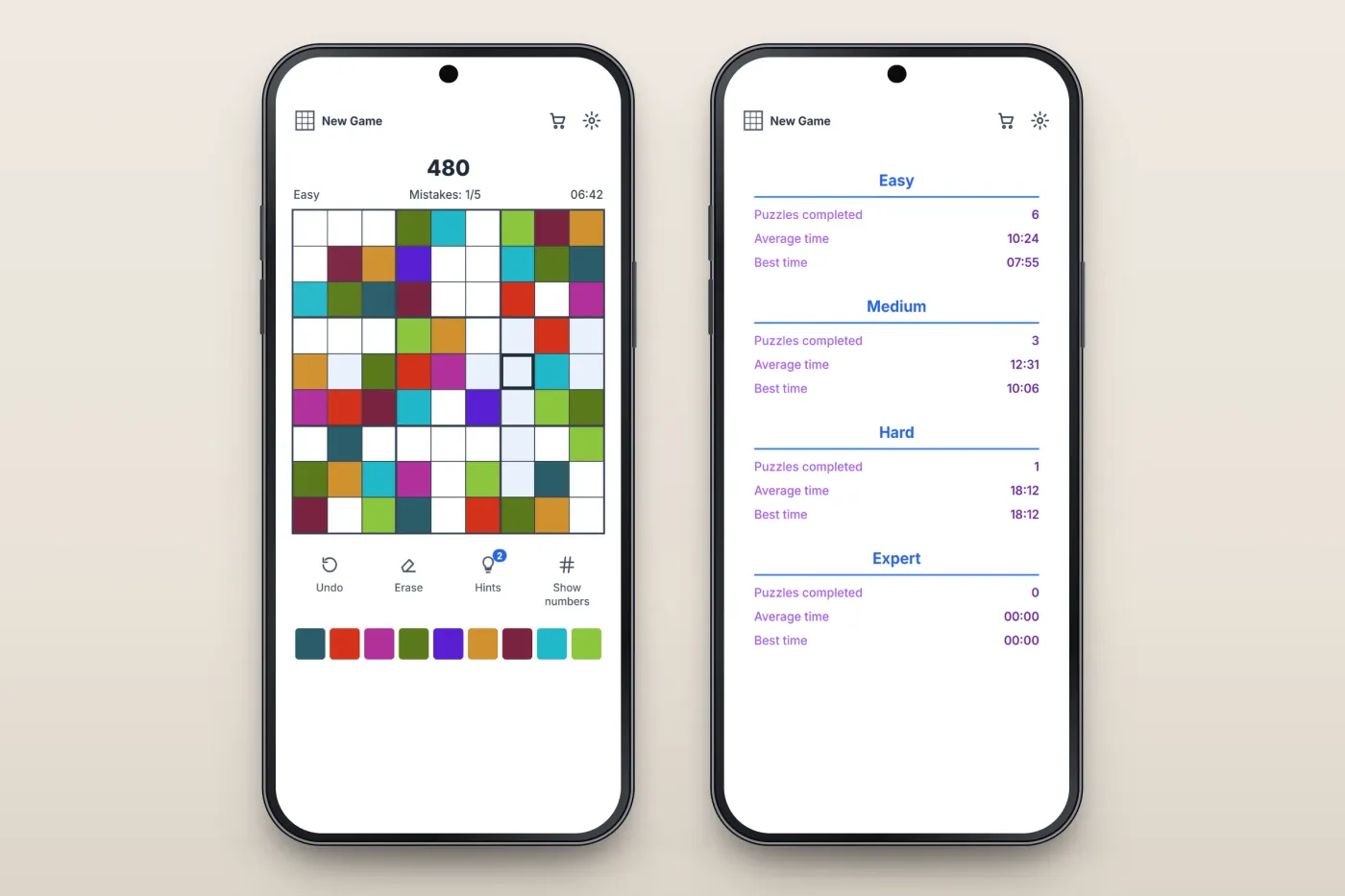
Classic Sudoku rules with nine colours in place of the digits; numbers can be shown on the colours for players who prefer them. The player picks Easy, Medium, Hard or Expert, has undo, erase and hints, and sees completed puzzles and times for each difficulty.
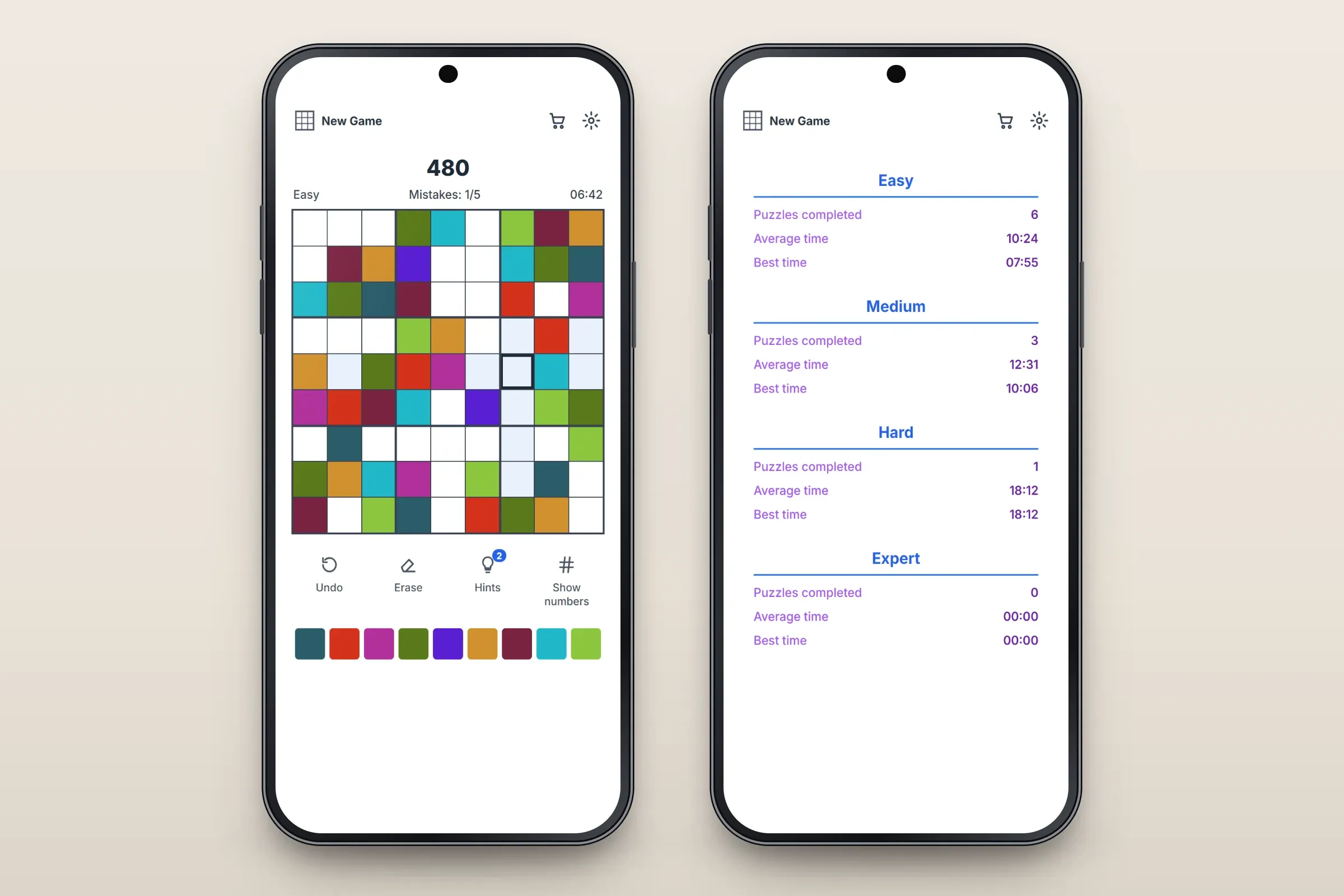
A colour puzzle in progress, and statistics by difficulty. Close-ups on phones: tap any image for the full screen. Linked-loop ball puzzle
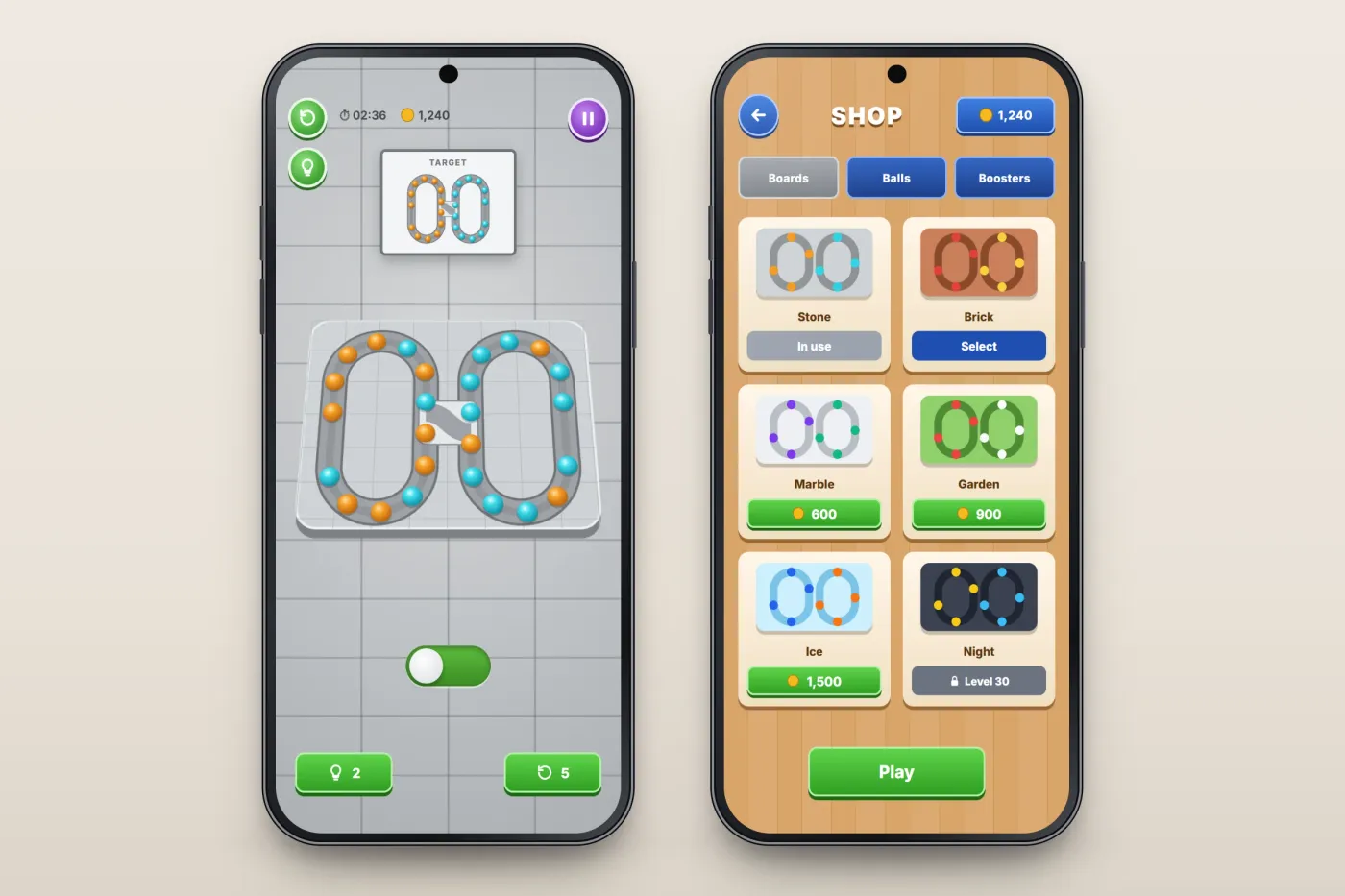
Two linked loop tracks on a 3D board hold coloured balls. The player moves the balls around the loops to recreate the target pattern shown above the board. Coins buy new boards, balls and boosters in the shop.
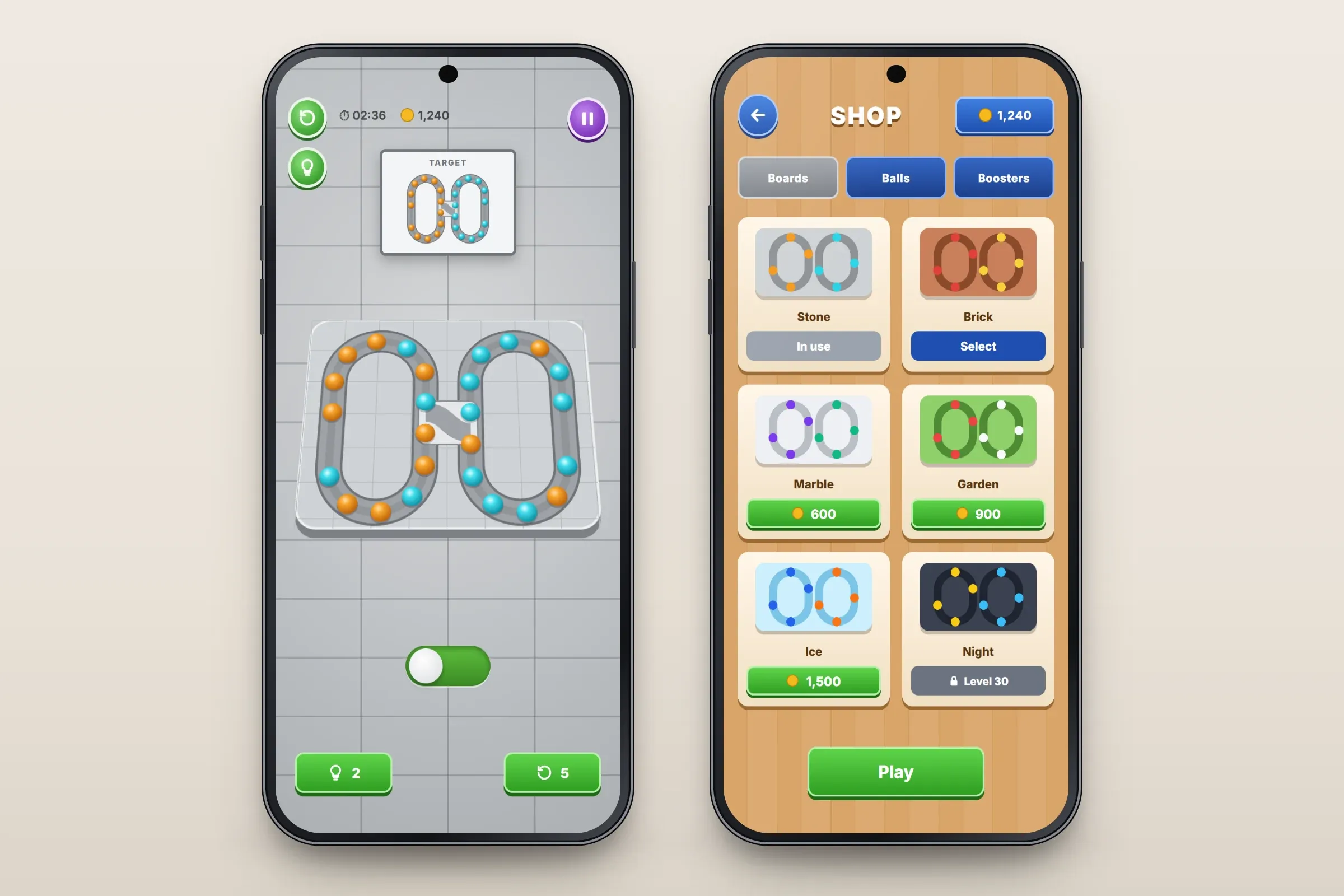
Matching the target, and the shop. Close-ups on phones: tap any image for the full screen. Pattern block puzzle
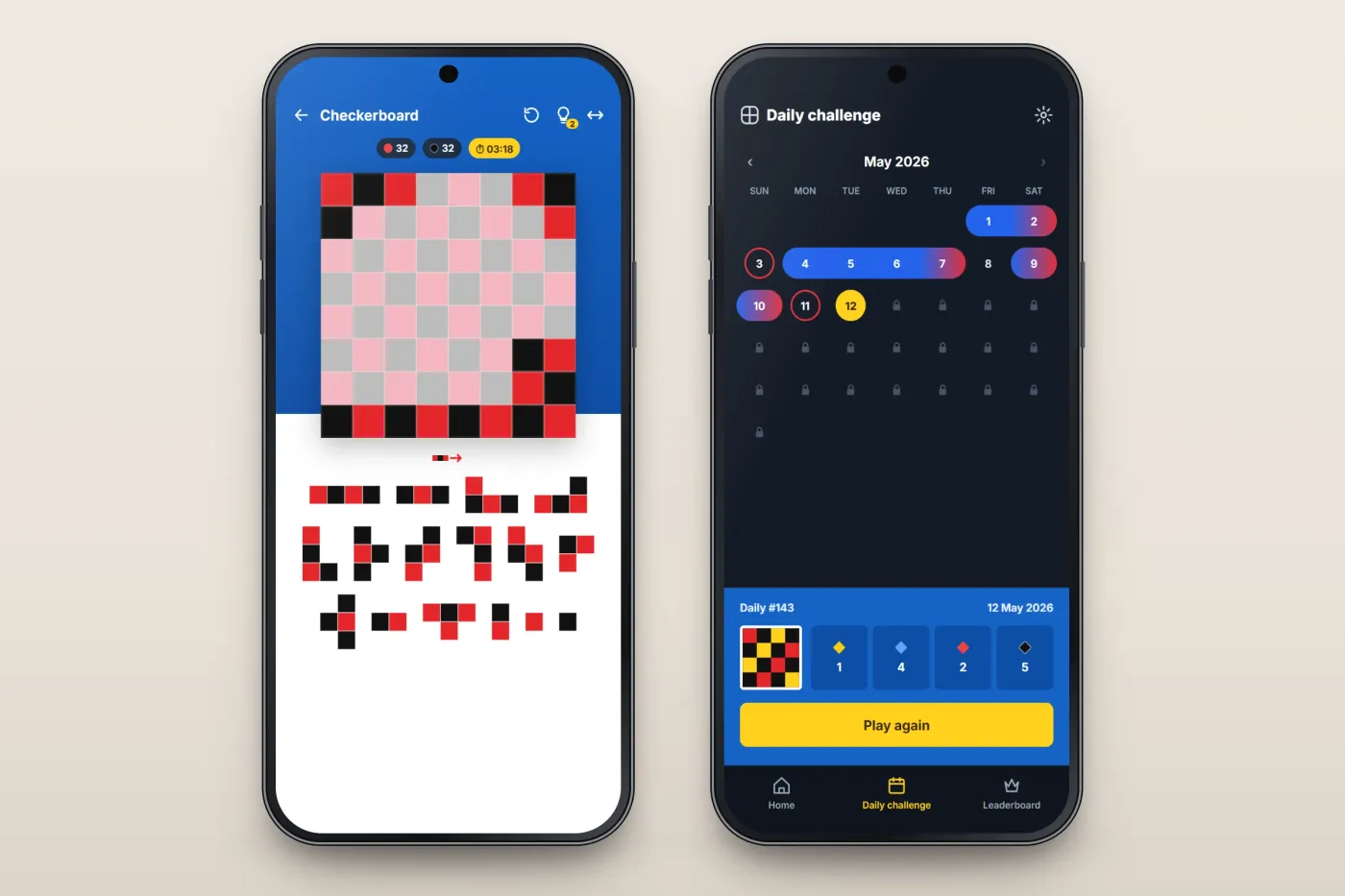
The player rebuilds a pattern on an 8 by 8 board from red-and-black pieces. Classic challenges are sorted from Easy to Expert, a daily challenge calendar tracks the days played, and hints are available.
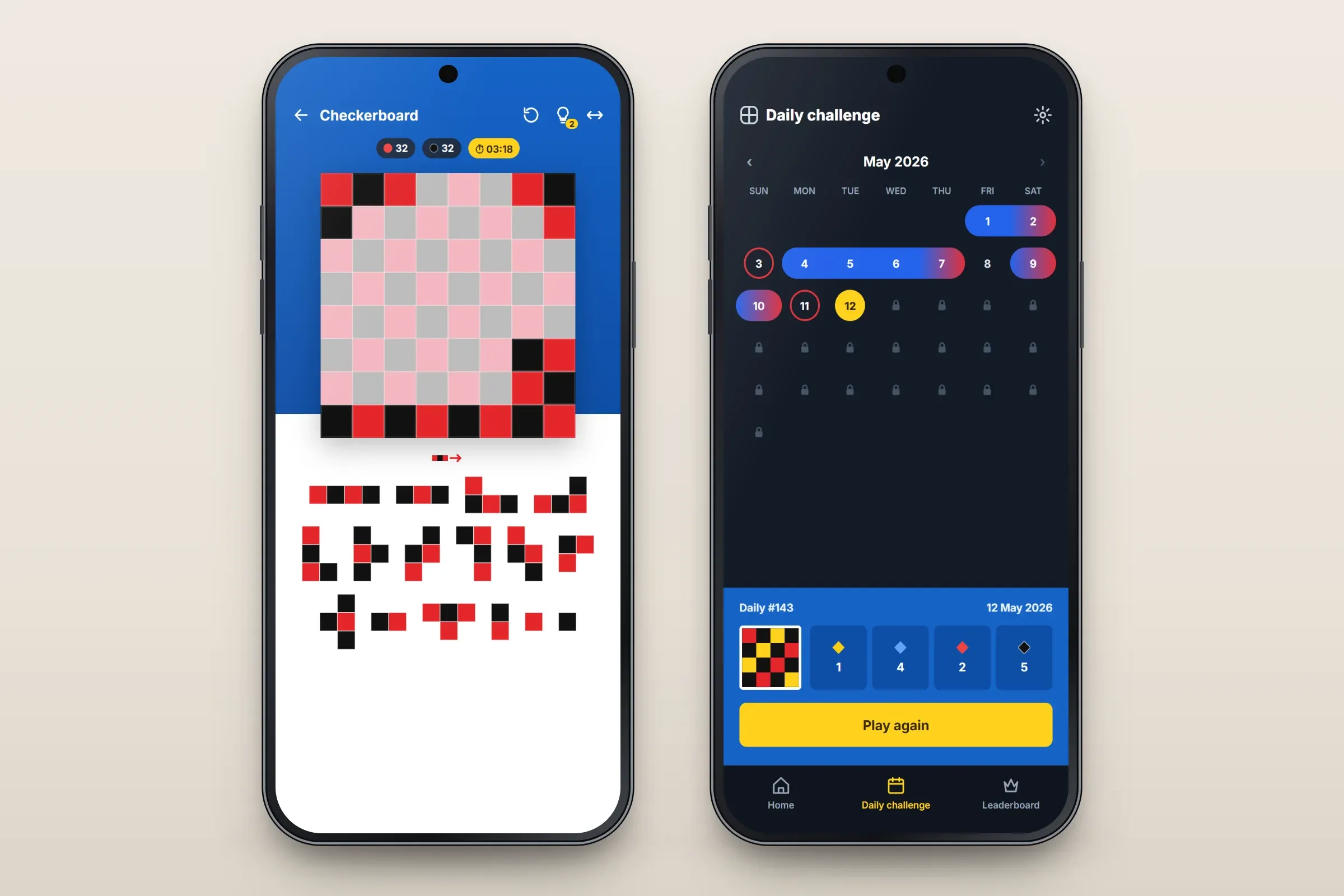
Rebuilding a pattern, and the daily challenge calendar. Close-ups on phones: tap any image for the full screen. Sliding-tile ball path puzzle
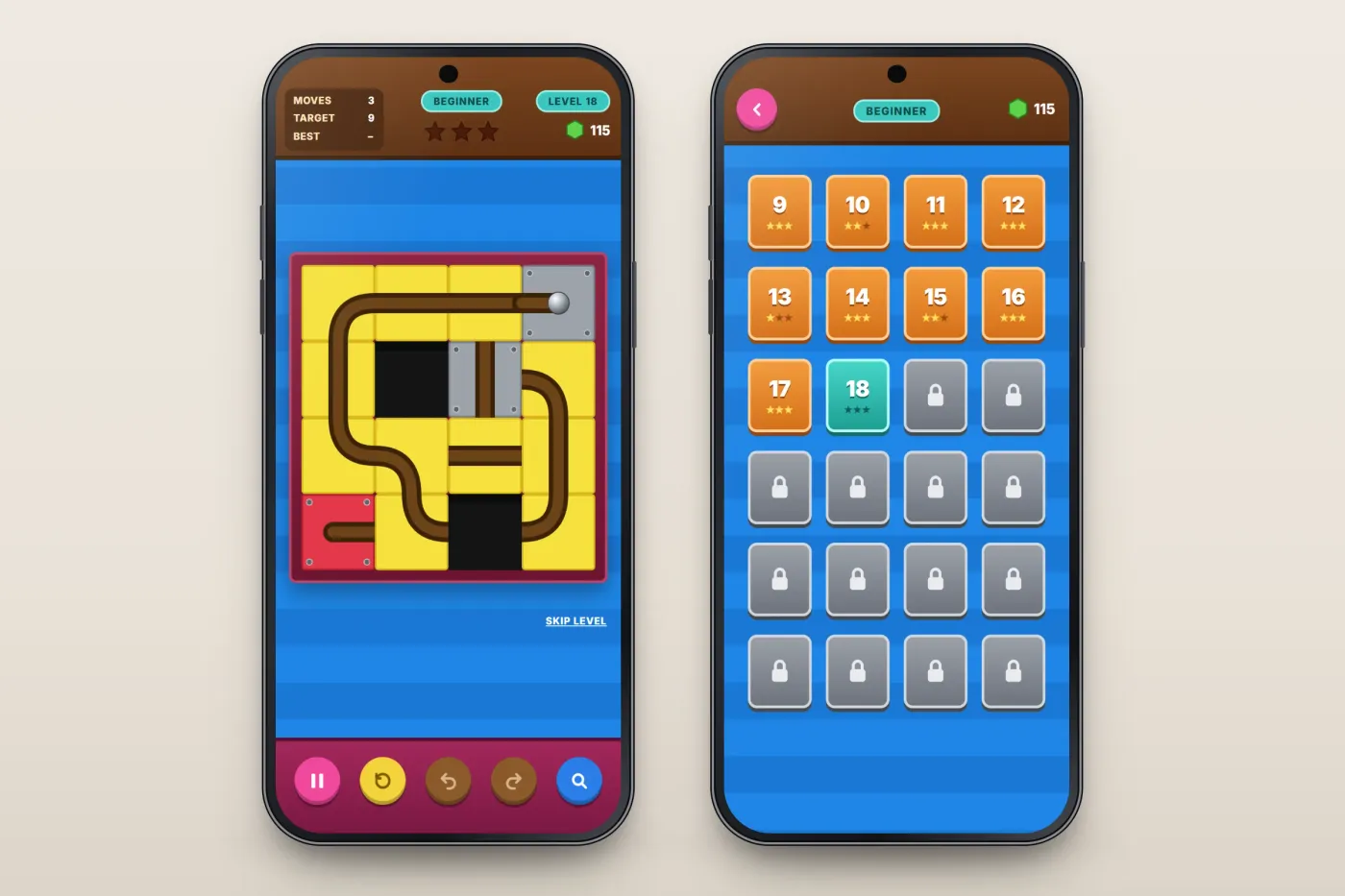
The player slides tiles until their track sections form one route from the ball's start tile to the goal. Each level has a move target, and finishing close to it earns up to three stars. Buttons for undo, redo, restart and hints sit below the board, and the level packs unlock one after another.
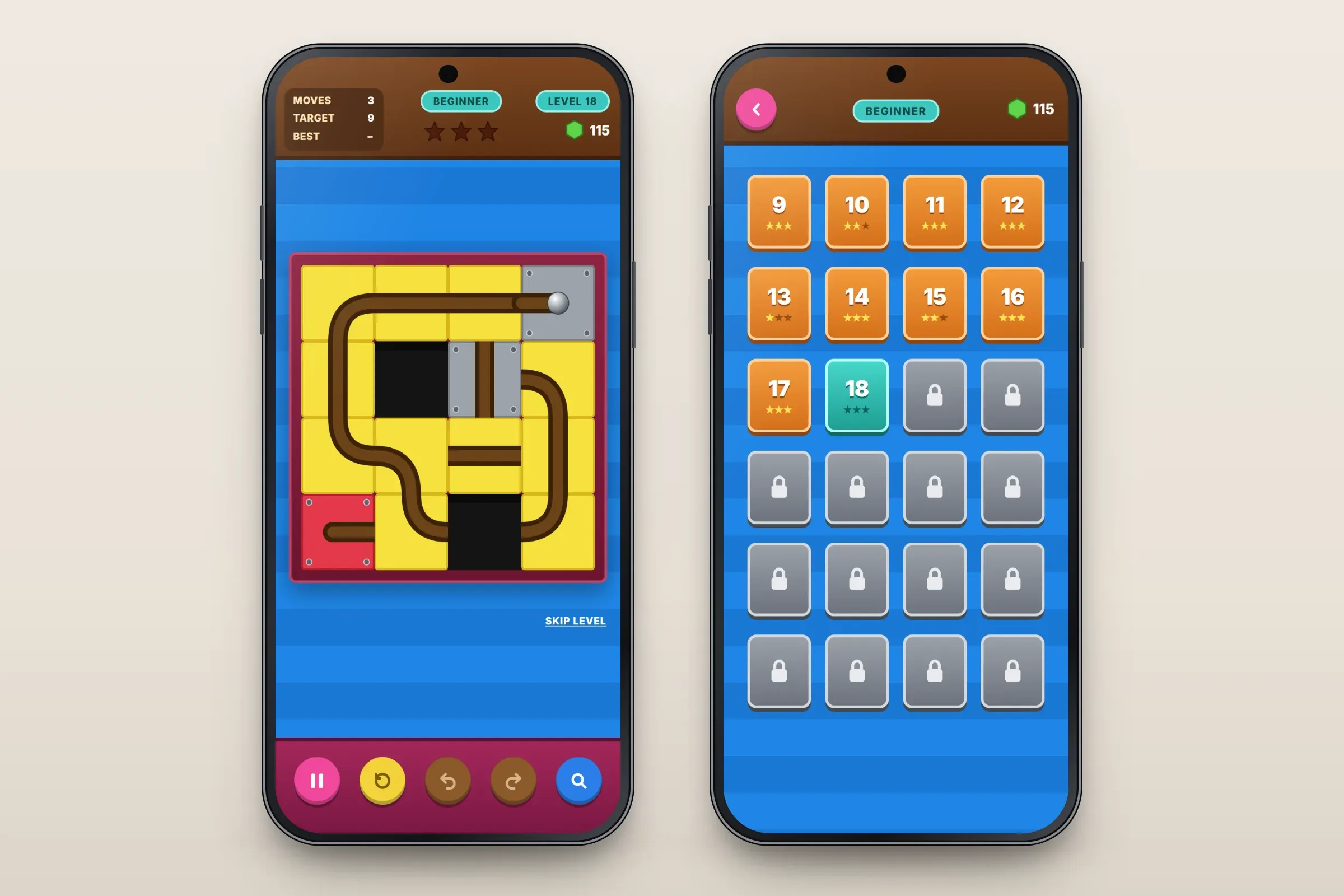
Sliding tiles to build the path, and the level map. Close-ups on phones: tap any image for the full screen.
About these images: every screen on this page is recreated in the game's style for this portfolio, with example data and no game names or logos, to keep the clients confidential. The screens follow each game's real layout and mechanics, but they are not screenshots of the delivered games.
Our contribution
Our role
Game development
Development of these games for our clients.
Related services